Traditional Japanese designs, or "Wagara", are traditional Japanese patterns. They are history designs, each with a specific meaning, originally created for decorating traditional garments. The patterns that date back to the 8th century Heian period of Japan, are largely inspired by nature and were crafted using techniques from painting and Chinese calligraphy. They were worn with purpose for different seasons and occasions. However, in the last century this language of pattern was being lost as younger generations shed traditional dress for more westernized clothing. This spurred the use of "Wagara" in homewares and fashion accessories in an effort to prolong the dialect of these traditional Japanese patterns, making them just as relevant and usable today.
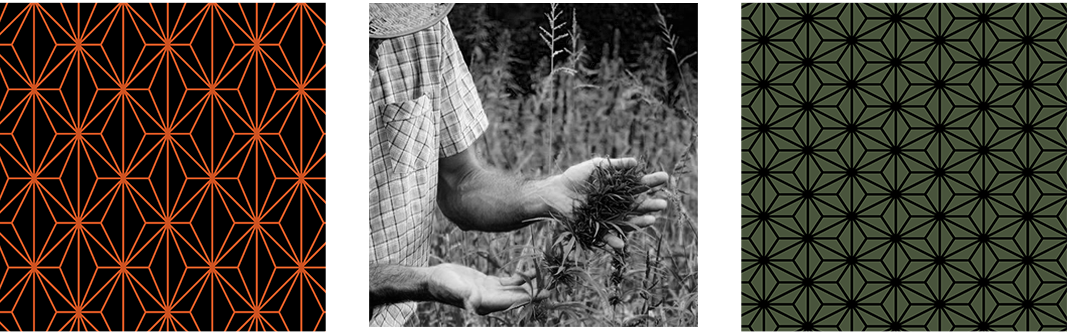
Asanoha depicts a geometric design of hemp leaves. Hemp has long been an important plant in Japan, being the primary clothing fiber along with silk, until the 17th century when cotton was introduced to Japan. It represents growth and good health. Since hemp grows quickly, it was customary to use Asanoha for children's clothes, in hopes that the child would also grow fast and strong.
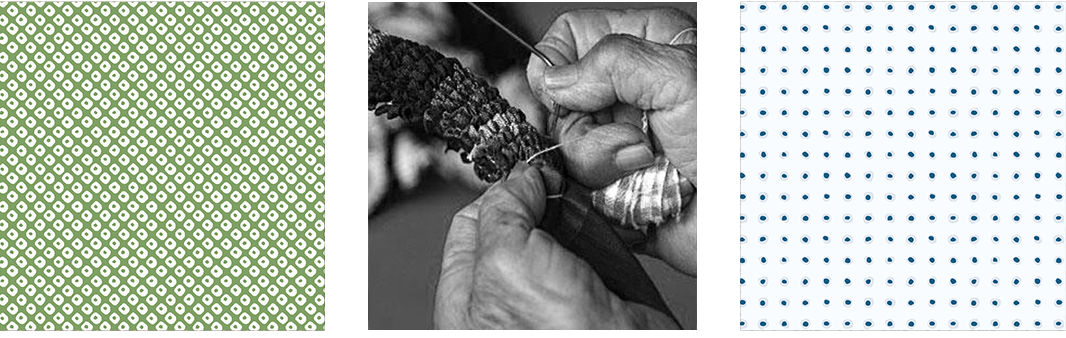
Shibori is a resist-dye technique similar to tie-dyeing, where fabric is tied off with string to form intricate patterns. When the string is removed, it reveals detailed images. Shibori dyeing requires a lot of time and skill to achieve. The small dot patterns shown above are known as Kanoko Shibori.
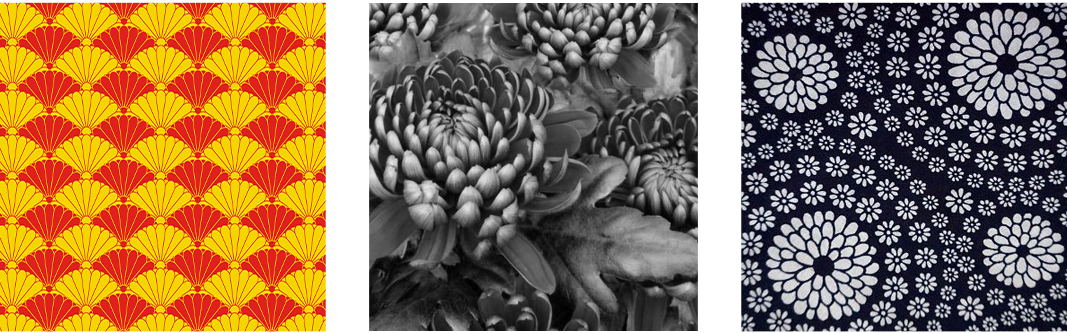
The Chrysanthemum, or Kiku in Japanese, is a symbol that represents longevity and rejuvenation. When first introduced to Japan during the Nara period, the Japanese Royal Family was fascinated with the Chrysanthemum. Eventually, during the passing of the years, the Chrysanthemum become the Imperial Family Emblem. Even now, it is used as the imperial symbol of Japan, even appearing on the Japanese passport.
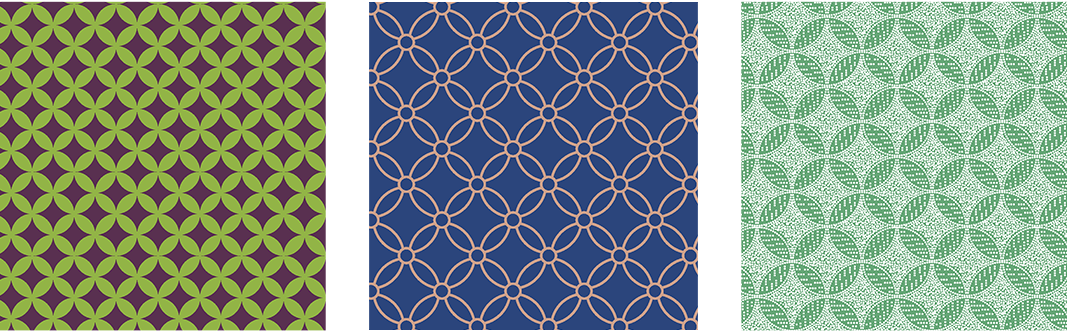
Shippou refers to the seven treasures of Buddhism: gold, silver, lapis lazuli, agate, seashell, amber, and coral. All of these are found on the Asian continent and were precious and rare products. Shippo also means "cloisonné," which refers to a decorating technique using metal strips and gems. The pattern represents these beautiful seven treasures inlaid in metal, in an infinitely repeating pattern.
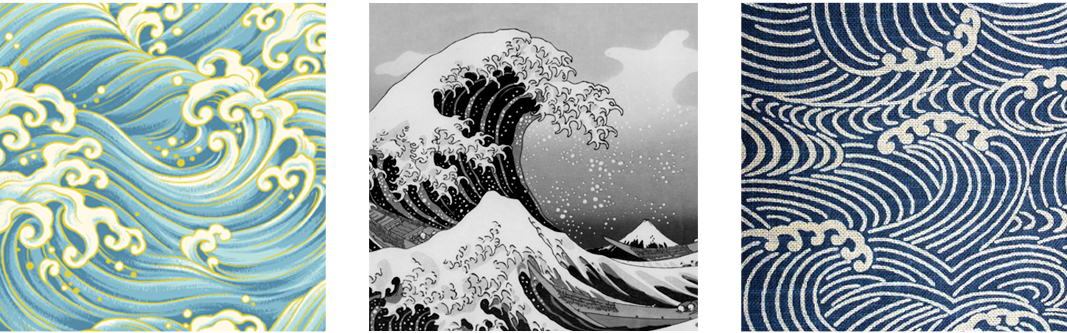
Nami, or "wave," was used as a symbol of gods of the seas. This pattern was also seen on banners and armor from the Sengoku Era (the age of provincial wars), in which troops in war resembled a moving wave. The pattern represents strength, with marvelous depictions of churning, flowing waves.
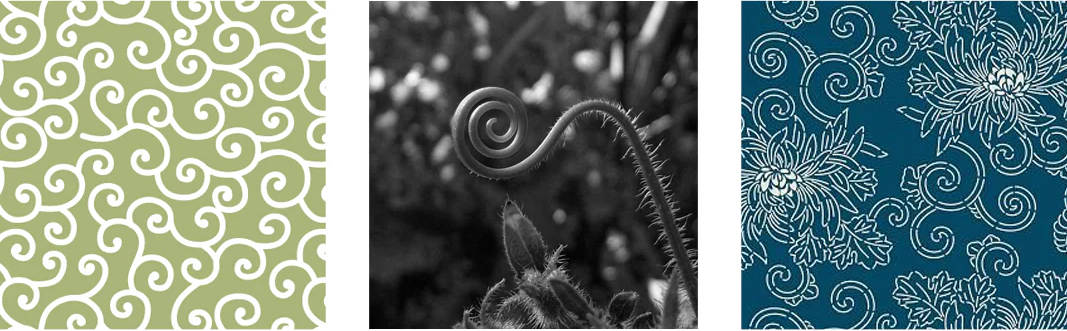
Karakusa, or "arabesque", is taken from the patterns found on stalks and tendrils, and the links between leaves and vines of plants. It is a symbol for eternity and sometimes a symbol for a family's legacy, like a family tree in Western culture.
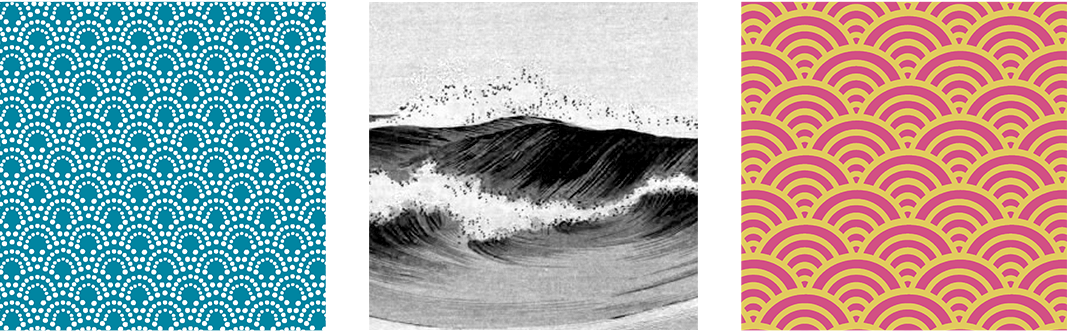
Seigaiha means "blue ocean waves." This pattern has been used in Egypt, Persia, and around the world. In Japan, it is said that the name comes from Seigaiha, the title of an ancient Japanese court dance. In ancient times, it was used for auspicious events. It is considered a symbol of peace, good luck, and good fortune.
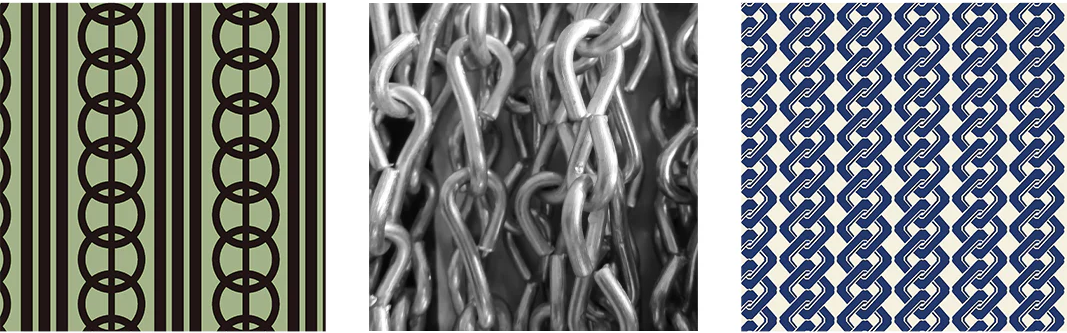
This pattern was imported from an island outside of Japan. It came to be known as Shima, which means "stripe." It is said that this pattern was often worn by upper-class aristocrats. The chain-link shima pattern is known as Yoshiwara Shima, referring to the town where the pattern came from. Yoshiwara Shima symbolizes how the town draws you in and hold you, like chains. It has also been described to be the chains linking a community together.
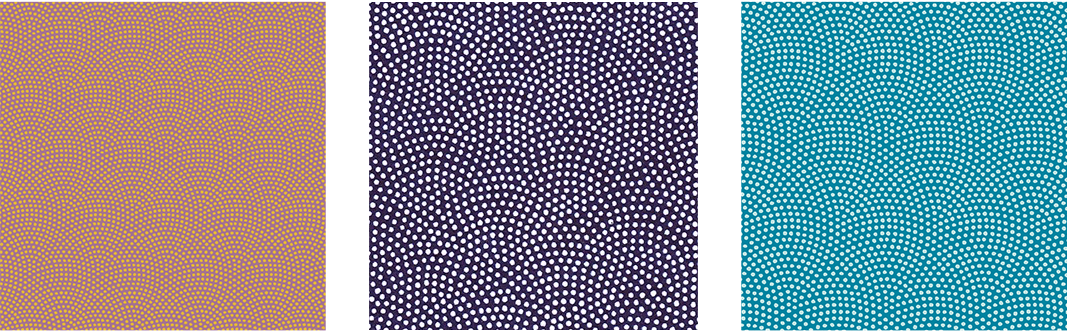
Komon means "fine pattern", and is a name for patterns made up of tiny, tiny details, appearing like a solid color from afar. Komon patterns were originally only used for ceremonial garments. Komon in modern days is mostly used on Kimono fabric, and is filled with both big or small patterns.
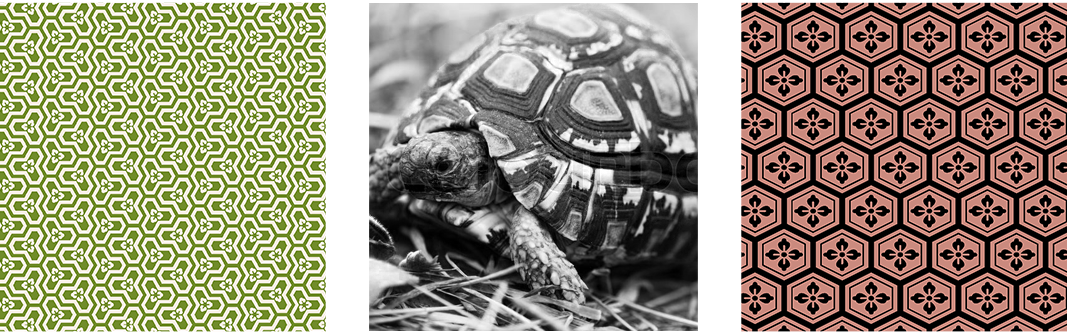
Kikko means "tortoise shell." Originally, this hexagonal geometric design came from Western Asia. The tortoise represents longevity in Japan, and is said to live for ten thousand years. Thus, the Kikkou pattern is meant to symbolize longevity.
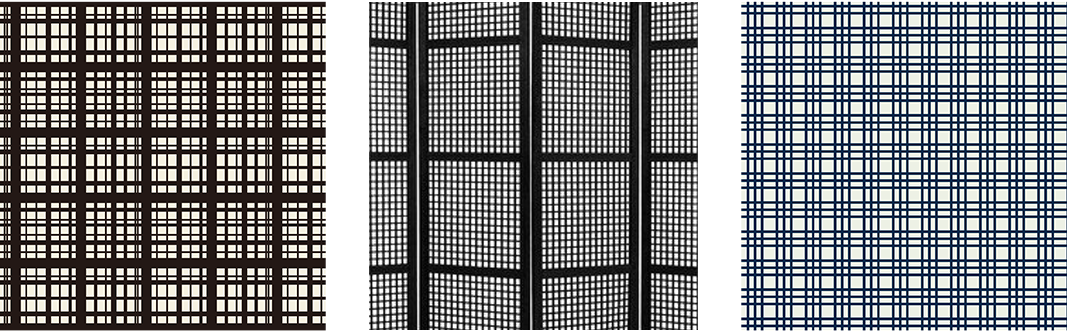
In the Edo period, it was common to have room dividers in a lattice pattern. Thin wood or bamboo was set horizontally and vertically to create this pattern. It is said that Koushi is based off these patterns. Koushi with thicker lines represents power; Koushi with thinner lines stands for elegance.
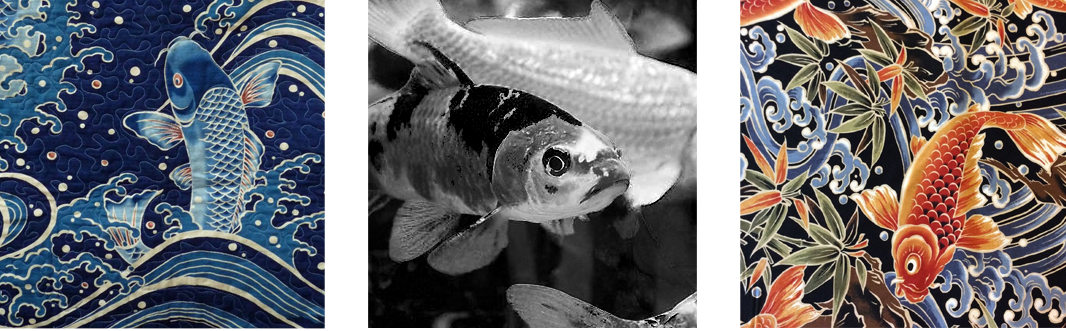
In China, there is a legend of a waterfall emanating from a dragon's home, known for its difficulty to travel upstream. There is a saying that if any koi ("carp") succeeds to reach the gate of the dragon's home, the koi will become a dragon. Based on this legend, the combination of koi and flowing water has become an auspicious pattern symbolizing success in life, commonly meaning a successful career.
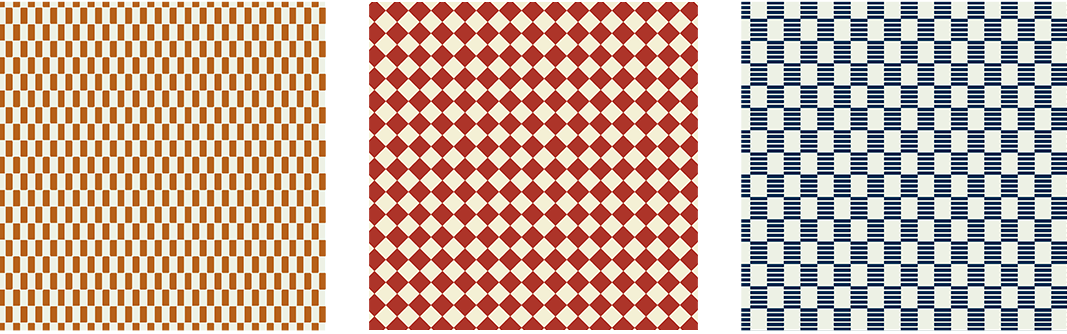
Ishidatami is also known as Ichimatumoyo (checkerboard pattern). Due to its simple design, Ishidatami was used in many different ways throughout the years. Each new development of the pattern was dictated by the presiding fashion at the time, usually featuring that era's popular color.
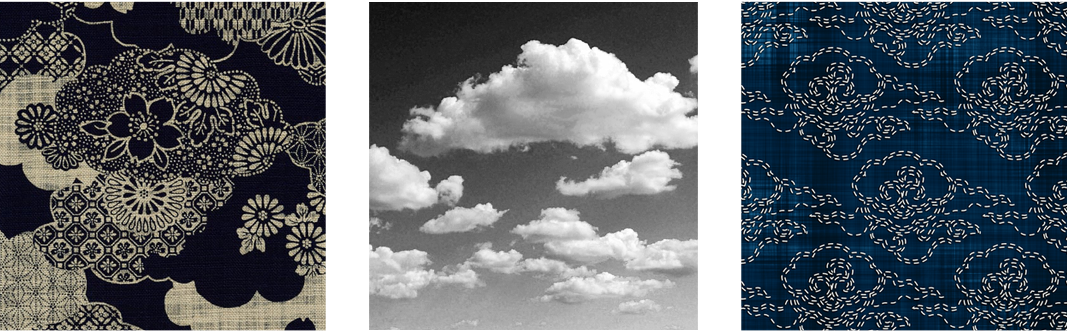
In ancient times, this pattern was called Unki ("cloud air"), because it looks like the rising clouds that come from mountains, where the gods are supposed to live. Now, it can be called Kumo, meaning "cloud." The name Kaminarimon comes from ancient Chinese, and represents a spiraling visualization of lightning.
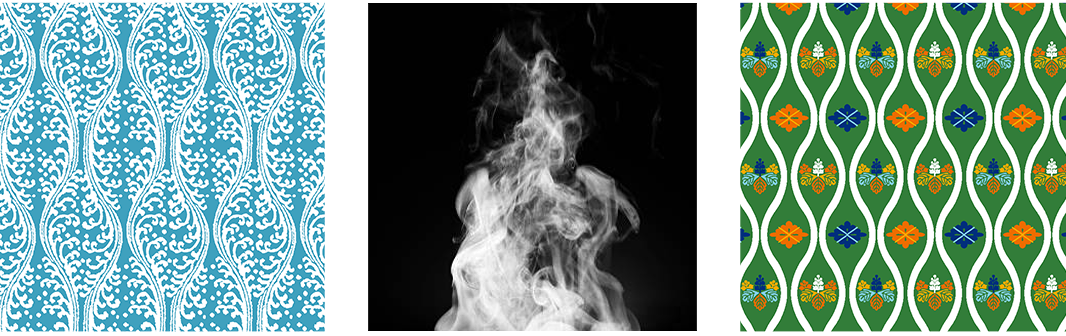
Tachiwaku is the pattern resembling rising steam. In the Heian period, the pattern required advanced fabric making techniques. Therefore, it was exclusively used on clothes for the upper class. There are various kinds of combinations with other patterns Tachiwaku.
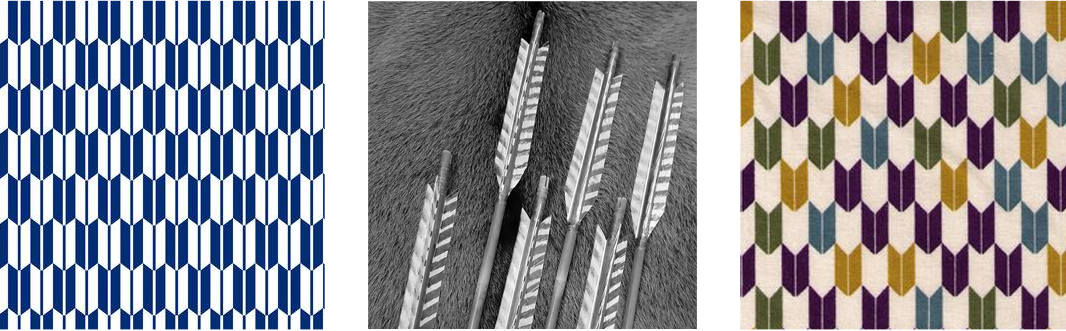
The Yagasuri pattern depicts the fletching of arrows, which was an important skill in ancient Japan, but continues to be practiced in modern ceremonies. Yagasuri is often seen in graduations and weddings. It represents steadfastness and determination, as an arrow that is shot straight never comes back.
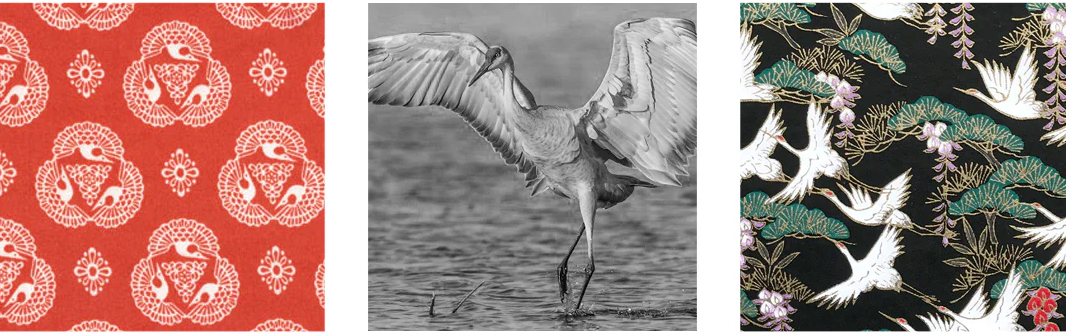
In Japan, the crane (Tsuru) is a common symbol representing longevity and good fortune. It is typically represented with the tortoise. There is a phrase saying Tsuru wa sen-nen, Kame wa man-nen; A crane a thousand years, a Tortoise ten thousand years. Initially, Tsuru was used only for high-ranking families. Over the years, it has often been combined with other patterns representing auspiciousness.
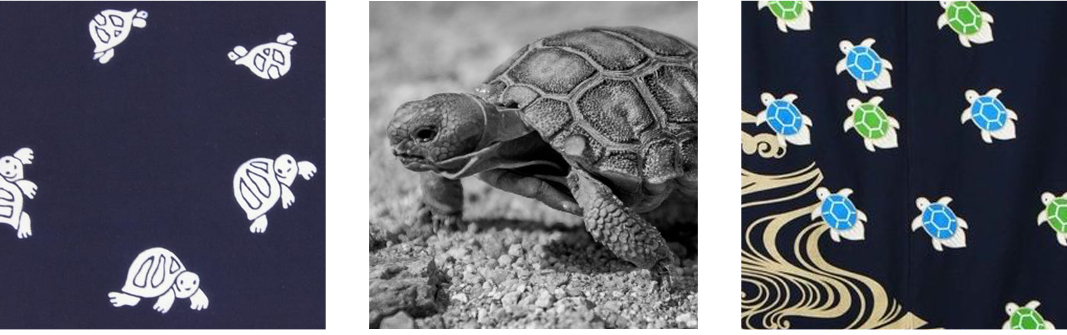
The tortoise is a symbol for long-life and good fortune. It is said to live for 10,000 years. Sometimes the tortoise is shown with a tail made of seaweed, showing its age, which is called a minogame.
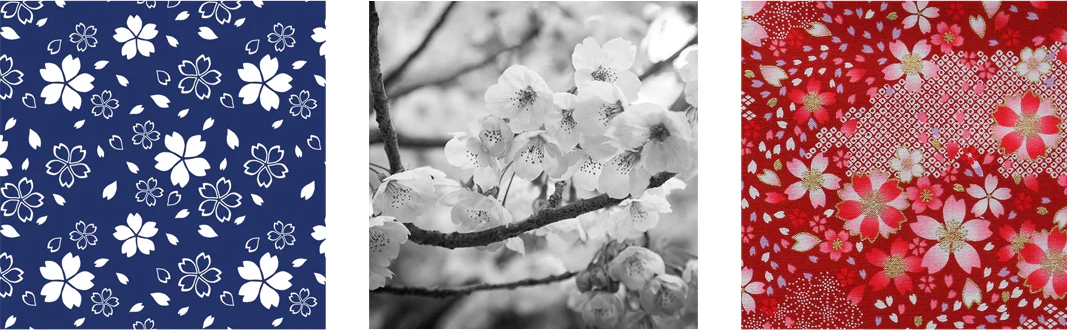
Sakura is a popular Japanese pattern, representing cherry blossom petals. A symbol of spring, it is also commonly used throughout the year. Cherry blossoms are a common symbol of Japan, and also of beginnings as they bloom at the start of the school year.
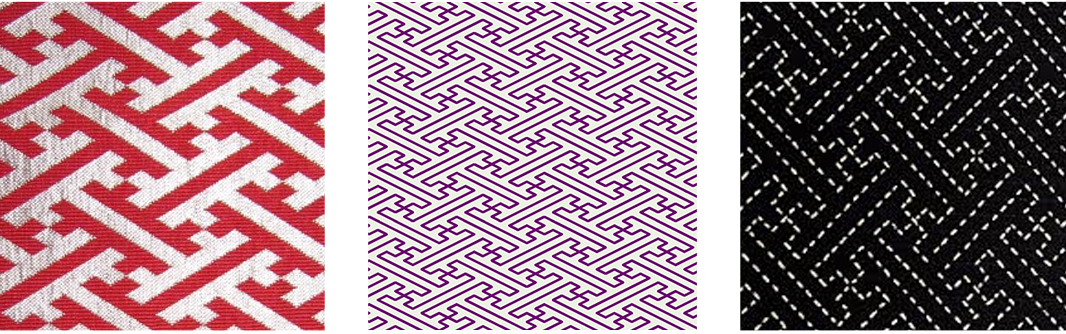
Sayagata is a pattern of interlocking manji - ancient Buddhist symbols that have been used across many cultures for thousands of years. The symbol came to Japan around the 1500s, and is known to represent life and strength.
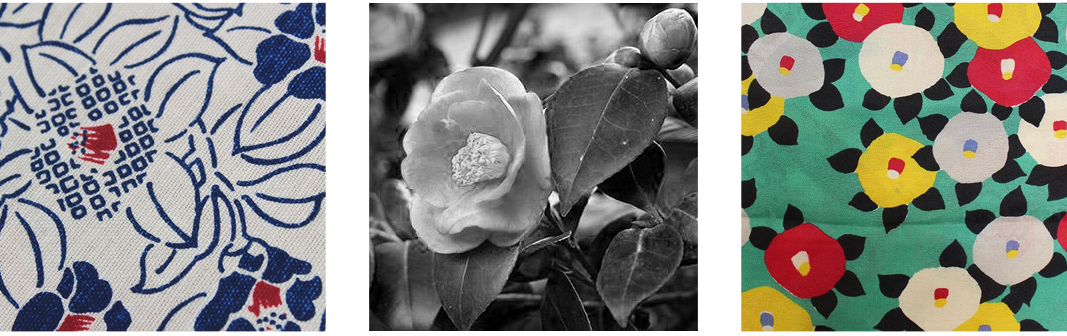
Tsubaki is one of our most popular patterns, representing the camellia flower. The pattern became popular in the Edo era, and has different meanings depending on the color. Red flowers symbolize love, and white ones show longing. As camellia begin blooming in the winter, it is a hopeful sign for the coming spring.
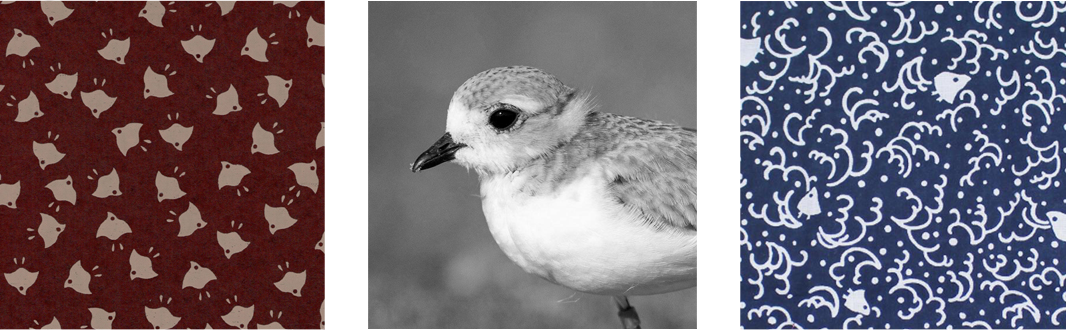
Chidori, or Plovers, are a migratory bird in Japan. They are usually depicted flying over waves. Since they have to brave high waves and strong winds, they are a symbol of strength and perseverance.
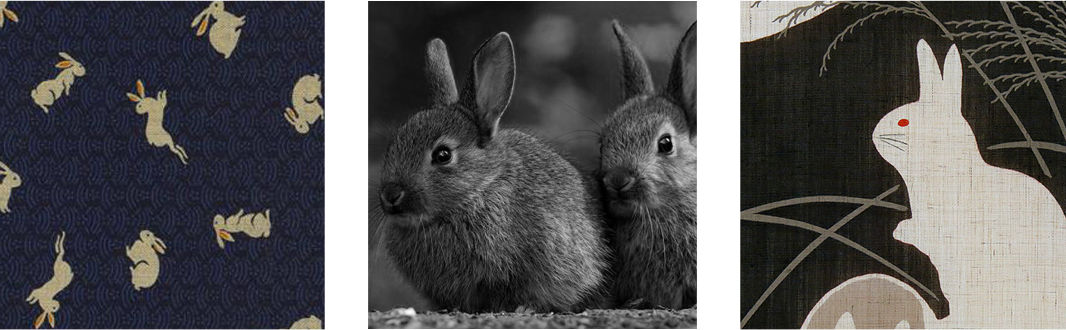
Rabbits are a particular symbol in Japan. There are two common stories. One is Inaba no Shirousagi; The White Rabbit of Inaba. In one part of the story, the rabbit challenges the sharks to see whose clan is larger; the rabbits or the sharks. The sharks line up over the ocean, and the rabbit counts them as he jumps along. It is actually just a trick to use the sharks as a bridge to cross the ocean to Inaba. Ever since, this has been a popular motif. The other common story is of the rabbit living on the moon. Like the European "man in the moon", in Eastern mythology there is a rabbit in the face of the moon. In Japan, this is a rabbit pounding mochi rice cakes. The word for "making mochi", mochizuki, sounds very similar to "moon mochi", mochitsuki.
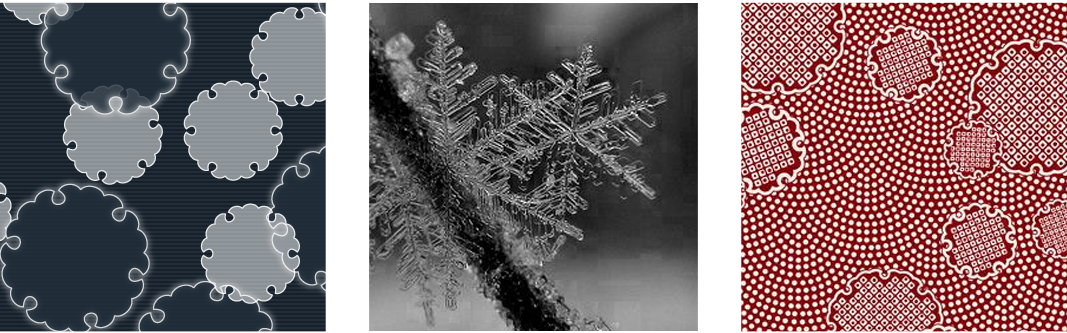
The Yukiwa pattern represents snowflakes, and was drawn before people could see the real geometry of snowflakes. It became popular in Edo period Japan for summer kimonos, usually depicted with flowers or bamboo shoots inside the circles.
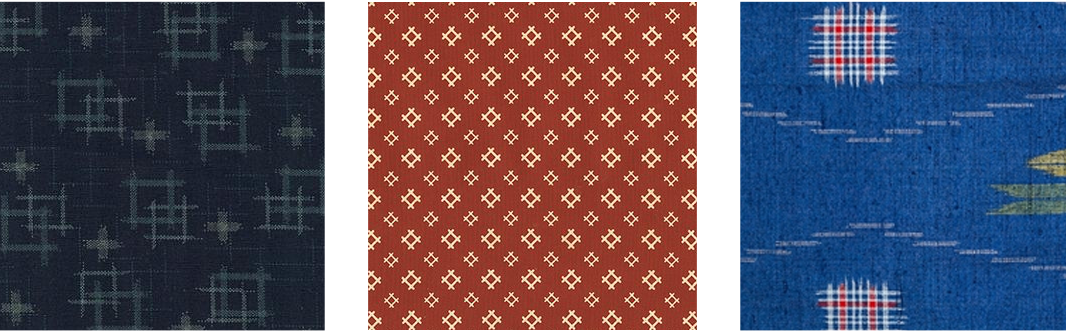
Igeta depicts a well, and is a common motif in Kasuri fabrics because of its simplicity. Since a well is a source of water, it symbolizes life and good fortune. It also is a popular family symbol.
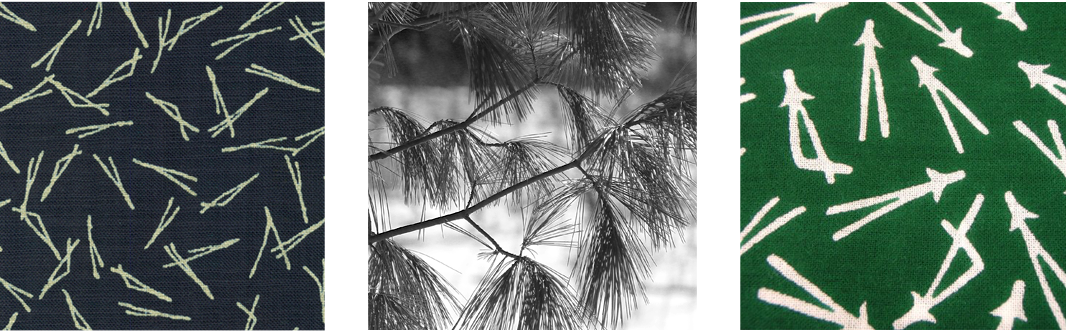
Matsuba represents long pine needles that fell from a tree. It is a symbol for longevity and perseverance, like the evergreen tree that stays green through harsh winters.
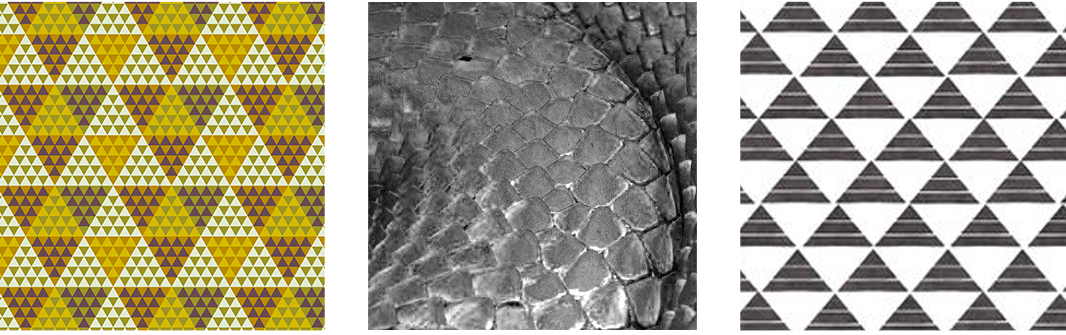
Uroko means scales, as in the scales of a fish or snake. It is used as a protective charm, symbolizing scales of a dragon, as a pattern on the lining of Kimono or Obi. However, it is also seen in theater on villains as the scales of a snake.
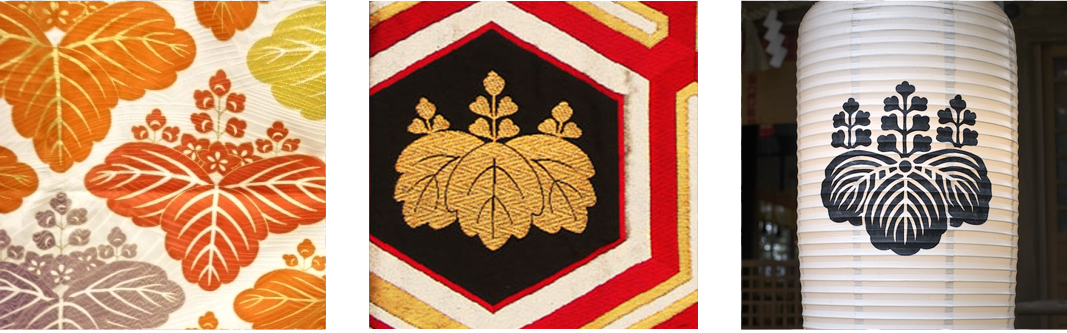
The Kiri, or Paulownia, is also known as the "princess tree". Traditionally, the trees would be planted when a girl was born, and cut down to be sold and made into gifts when she was the age to marry. It is closely associated with the Ho-ou Phoenix, which was said to nest in the tree, and would then watch over the family. The Kiri is also a current symbol for the government in Japan.